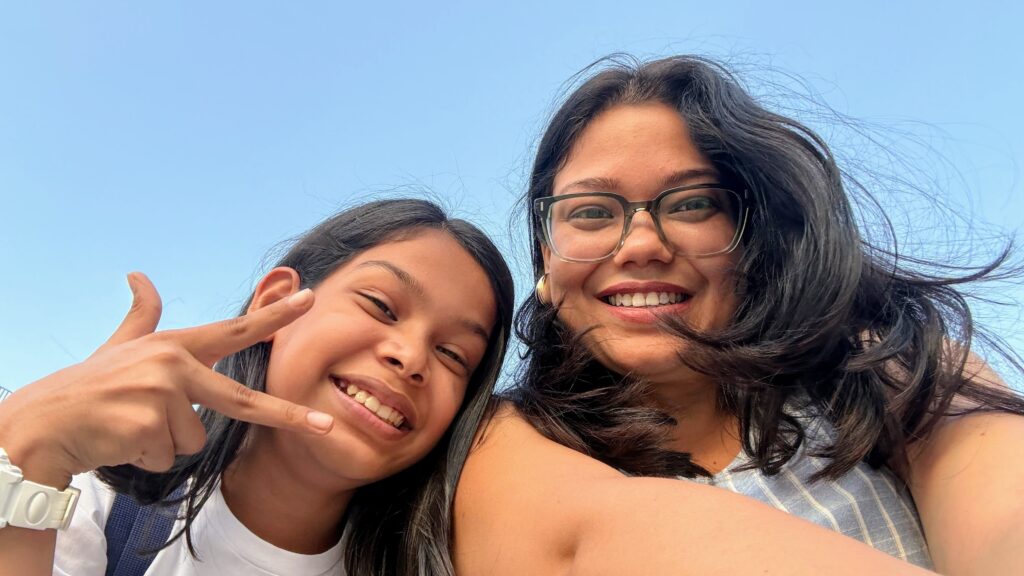
Every afternoon, I ask the same question. “How was school?” and almost every afternoon, I get the same answer. “Fine.”
If you’re reading this, I’m guessing you’ve heard that answer too.
As moms, we spend hours wondering what happened during those six or seven hours our children were away from us. Did they eat properly? Did they make friends? Did someone hurt their feelings? Did they learn something exciting? Were they happy?
Then when they walk through the door, drop their bag, kick off their shoes, and head straight for a snack, all we get is a casual, almost dismissive:
“Fine.”
For the longest time, I thought my daughter simply didn’t want to talk. I assumed she was being secretive or uninterested. Sometimes I would ask again. “What do you mean by fine?” “What happened in school?” “Tell me something!” and suddenly, what started as a simple conversation felt like an interrogation.
The more I pushed, the less she spoke. It took me a while to realize that the problem wasn’t my child; the problem was my question.
Why “How Was School?” Often Doesn’t Work
Think about it from a child’s perspective. Imagine someone asking you to summarize your entire workday in one sentence. Not just the meetings, or just the tasks.
Everything. The conversations, emotions, challenges, funny moments, little victories, or the awkward situations. Now imagine doing that when you’re tired, hungry, and thinking about what’s for dinner.
Sounds difficult, doesn’t it? That’s exactly what we’re asking our children to do. School is not one event. It’s dozens of tiny experiences packed into a single day. For many children, especially between the ages of 7 and 12, it’s much easier to talk about specific moments than to summarize an entire day.
Once I understood this, our after-school conversations changed completely.
The Day I Stopped Asking the Same Question
One afternoon, instead of asking how school was, I asked:
“Who made you laugh today?”
My daughter stopped mid-bite, then she smiled, and then she told me an entire story about a classmate who accidentally called the teacher “Mom.” For the next ten minutes, she kept talking without any prompting or any pressure.
Without me asking twenty follow-up questions. That was the moment I realized that children often open up when we ask about experiences instead of evaluations, and since then, these questions have become our secret weapon.
Questions About People
Children remember people long before they remember lessons. People create emotions, stories, and memories.
Try these:
1. Who made you laugh today?
2. Who did you spend the most time with today?
3. Did anyone do something kind for you?
4. Did you help someone today?
5. Who seemed happiest today?
6. Did you meet someone new?
7. Who would you like to sit beside tomorrow?
8. Did anyone surprise you today?
These questions often reveal friendships, social struggles, and emotional experiences without directly asking about them.
Questions About Funny Moments
If there’s one thing children love talking about, it’s funny things. Humor lowers defenses. It makes conversations feel natural.
Ask:
9. What was the funniest thing that happened today?
10. Did someone say something silly?
11. What made the class laugh today?
12. What would make a funny cartoon from your day?
13. Did anything unexpected happen?
14. If today’s school day were a comedy movie, what scene would be in it?
You’ll be surprised how much information is hidden inside these answers.
Questions About Learning
Not every child wants to discuss grades. But most children enjoy sharing interesting discoveries.
Try asking:
15. What was the most interesting thing you learned today?
16. What surprised you today?
17. What made you curious today?
18. What topic would you like to learn more about?
19. What was easier than you expected?
20. What felt challenging?
21. If you had to teach me one thing from school today, what would it be?
This approach encourages curiosity instead of performance. Honestly, that’s something I wish I’d understood much earlier.
Questions About Small Details
Children often remember details that adults completely overlook; these little observations can open the door to bigger conversations.
Ask:
22. What was the loudest part of your day?
23. What was the best thing you ate today?
24. What color did you see the most today?
25. What was the best moment during recess?
A simple answer about recess can easily turn into a discussion about friendships, confidence, teamwork, or challenges.
The Hidden Benefit of Better Questions
At first, I thought these questions were helping me learn more about my child, but something unexpected happened. They started helping my child understand herself better, too. When children regularly talk about their experiences, they begin noticing their own thoughts and emotions. They become more aware of what excites them, frustrates them, makes them feel proud, or makes them feel nervous.
This kind of emotional awareness doesn’t happen overnight. It develops through hundreds of tiny conversations. The kind that happens while unpacking lunchboxes, during evening walks, in the car, while folding laundry or before bedtime.
Not during formal “sit down and talk” sessions.
What to Avoid When Your Child Comes Home
As moms, our intentions are always good, but sometimes we accidentally make conversations harder. I’ve learned to avoid these immediately after school:
❌ How are you feeling?
This can be too broad.
❌ What went wrong today?
It automatically focuses on negatives.
❌ Why are you upset?
Especially if your child isn’t upset.
❌ Did you behave properly?
This puts children on the defensive.
❌ What marks did you get?
It shifts attention immediately to performance. Instead, start with connection, and information usually follows.
When Is the Best Time to Talk?
This was another lesson I learned the hard way. Many children don’t want to talk the second they walk through the door. They’re tired, hungry, or overstimulated. Just like adults after a long workday.
In our home, the best conversations happen:
- During snack time
- While cooking together
- During car rides
- Before bedtime
- During evening walks
Sometimes my daughter tells me more while brushing her hair than she does during an entire afternoon.
Children often open up when they don’t feel they’re expected to.
Why This Matters More Than We Realize
Years from now, our children may not remember every worksheet, test, or school project, but they will remember whether they felt heard. Whether they felt safe talking to us, whether they believed we were interested in their world.
That’s why these conversations matter. Not because we need every detail or we want daily reports. But because connection is built through ordinary moments. One conversation at a time, one story at a time.
A Small Shift That Changed Our Home
Today, I rarely ask, “How was school?” Instead, I ask things like:
“Who made you smile today?”
“What was the funniest thing that happened?”
“What would you like to do differently tomorrow?”
Somehow those tiny changes have led to bigger conversations than I ever imagined. Some days, I hear stories about friends; other days, it’s about classroom drama. Some days I learn about dreams, fears, and ambitions, and some days I still get:
“Nothing.”
And that’s okay, too, because parenting isn’t about getting all the answers. It’s about creating a space where our children know they can share them whenever they’re ready. Sometimes, that’s the most important lesson of all.
Frequently Asked Questions
Why does my child only say “Fine” when I ask about school?
Children often find broad questions difficult to answer. Asking about specific people, events, or moments makes it easier for them to respond.
What age group do these questions work best for?
These conversation starters work especially well for children aged 7–12, but many can be adapted for younger and older kids.
How many questions should I ask?
One or two is usually enough. The goal is conversation, not an interview.
What if my child still doesn’t talk?
Give them time. Focus on creating a relaxed environment and keep conversations pressure-free. Consistency matters more than immediate results.
Is bedtime a good time for these conversations?
Absolutely. Many children open up more during calm, quiet bedtime routines than immediately after school.
Please do not forget to subscribe to our newsletter, and we promise not to spam you. Have you checked our parenting zone or recipe section? Also, if you like my work, don’t forget to follow me on INSTAGRAM.