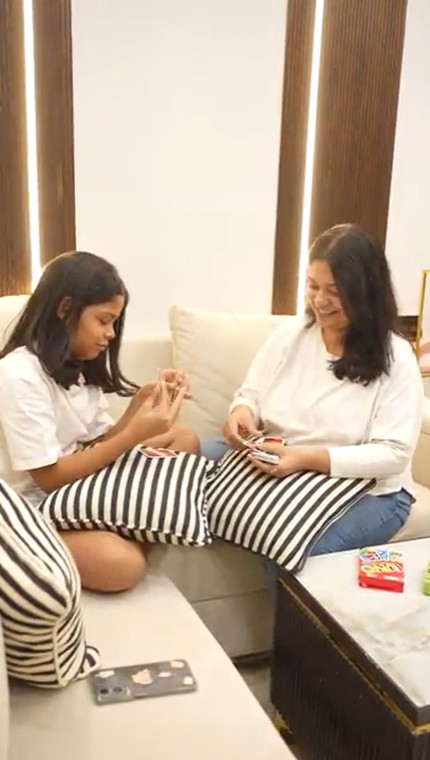
Dear readers, do you remember when your child couldn’t wait to tell you everything?
The endless stories on the ride home from school. The dramatic retelling of playground incidents. The excitement over a gold star, a funny joke, or even what their friend had packed for lunch, and then, almost overnight, something changes.
You pick them up from school and ask, “How was your day?”
“Fine.”
“What did you do?”
“Nothing.”
Conversation over.
As parents, these moments can feel surprisingly heartbreaking. Not because we need a detailed report of their day, but because those little conversations were how we stayed connected. They gave us a window into their world. So when the stories stop, it’s easy to wonder:
- Is something bothering them?
- Are they pulling away from me?
- Have I done something wrong?
- Is this just a phase?
If you’re parenting a 10, 11, or 12-year-old, you’re not alone. The preteen years often arrive with fewer words, more independence, and a growing desire for privacy. Suddenly, getting more than a one-word answer can feel like an achievement. I found myself in exactly this situation recently. My once-chatty child had become the master of short responses, and the harder I tried to start conversations, the faster they seemed to end.
That’s when I realized something important: My child hadn’t stopped wanting to connect. They just needed a different way to communicate.
What followed was one of the simplest yet most effective parenting discoveries I’ve made: conversation games. Not lectures or more questions. No heart-to-heart talks scheduled at the dinner table.
Just simple, playful games that took the pressure off and somehow got us talking again, and they’ve completely changed the way we connect.
Why Preteens Stop Sharing Everything
Before we jump into the games, let’s talk about what’s actually happening. Around ages 9 to 12, children begin a major developmental transition. They’re becoming more independent, spending more time with peers, developing stronger personal identities, and experiencing emotions they don’t always know how to explain.
According to the American Academy of Pediatrics, maintaining strong parent-child communication during the preteen years is essential for emotional well-being and healthy development. Parents can find evidence-based guidance on child development and parenting strategies at HealthyChildren.org. Preteens are beginning to seek autonomy while still needing strong emotional connections with their parents.
That’s a tricky balance; they want independence, but they still need us. They want privacy; however, they still crave safety. They don’t always want to answer direct questions, but they absolutely want to be heard.
The challenge is that many parents respond to this stage by asking more questions. How was school? Did anything happen? Are you okay? Why are you quiet? What’s wrong?
Ironically, the harder we push for answers, the more resistance we sometimes get. What preteens often need instead is a low-pressure environment where conversation can happen naturally. That’s where these games come in.
The Day I Stopped Interviewing My Child
One evening, as we sat down for dinner, I made a conscious decision to do something different. I wasn’t going to ask about school, and no rapid-fire questions disguised as conversation.
Honestly, I was tired of getting the same one-word responses, and I was beginning to wonder if I was asking the wrong questions altogether. So instead, between bites of dinner, I casually asked:
“If you could make one new rule at home that everyone had to follow, what would it be?”
Without missing a beat, my child replied: “No phones during meals.” I almost dropped my fork.
Just a few hours earlier, this was the same child who had answered every question with “fine,” “nothing,” or a shrug. Yet here they were, offering an opinion, starting a discussion, and actually engaging. What followed was one of the most meaningful conversations we’d had in weeks.
We talked about screen time, family habits, fairness, and why being present with one another matters. We shared opinions, debated ideas, and even laughed a little. The best part? It didn’t feel like work.
There was no pressure, no interrogation, or feeling that I was trying to pull information out of my child. The conversation flowed naturally because it started with curiosity rather than questions. That evening taught me something powerful: children often reveal the most about themselves when they don’t feel like they’re being interviewed.
Sometimes, all it takes is the right invitation for them to open the door to their world.
Game 1. The “What If” Game
Of all the conversation games we’ve tried, this one has become a family favorite because it’s incredibly simple and surprisingly revealing. The idea is straightforward: take turns asking imaginative “What if…” questions.
Questions like:
- What if you could create one new rule at home?
- What if school only lasted three hours a day?
- What if you could instantly master any skill?
- What if you could travel anywhere in the world tomorrow?
- What if animals could talk?
At first, these questions sound silly, maybe even a little random, but don’t let that fool you. What starts as a playful conversation often turns into something much deeper.
One evening, my child answered, “I’d make homework optional.” On the surface, it sounded like a typical kid response. But as we kept talking, I realized it wasn’t really about homework at all. It was about feeling overwhelmed, managing expectations, and wanting more time to relax.
Another time, when I asked where they’d travel if they could go anywhere tomorrow, the answer was Japan. That simple response led us into a fascinating conversation about culture, food, language, and dreams for the future. What I love most about this game is that it gives children the freedom to share without feeling like they’re being questioned. They don’t have to defend their answers or worry about saying the “right” thing. They’re simply exploring ideas.
Somewhere in those imaginative answers, you often get a glimpse into what they’re thinking about, worrying about, or hoping for. The magic isn’t in the question itself.
It’s in the unexpected conversations that follow.
Why This Works
As parents, we often ask direct questions because we’re looking for direct answers. But preteens don’t always open up that way. Hypothetical questions feel different, and they’re playful instead of personal, curious instead of intrusive.
There are no right or wrong answers, no pressure to explain themselves, and no fear of being judged. Children are simply invited to imagine, and when children feel safe enough to imagine, they often feel safe enough to share. Sometimes, the quickest route to understanding what’s on your child’s mind isn’t asking them directly; it’s giving them a chance to explore a “what if” world first.
Game 2. The “If I Were A…” Game
This game has become one of our favorites because it almost always ends in laughter and occasionally, an unexpected parenting moment that stays with me long after the conversation is over.
The rules are simple. Take turns completing prompts like:
- If I were an animal, what would I be?
- If I were a superhero, who would I be?
- If I were a food, what would I be?
- If I were a movie character, who would I be?
- If I were a season, which one would I be?
At first, the answers are usually funny, creative, or completely random. But the real magic begins when you ask one simple follow-up question:
“Why?”
One evening, I asked my child what animal I would be.
Without hesitation, they replied: “A golden retriever.” Naturally, I laughed and asked why; their answer stopped me in my tracks: “Because you’re always checking on everyone and making sure they’re okay.” I smiled and laughed it off in the moment. But later that night, when the house was quiet and everyone was asleep, I found myself thinking about those words.
Because hidden inside that playful answer was something far more meaningful. My child noticed, understood, and was paying attention in ways I hadn’t realized. As parents, we spend so much time wondering whether our children hear us, appreciate us, or even notice the little things we do each day.
That silly conversation reminded me that they do. Sometimes these games reveal observations, feelings, and perspectives that direct questions never uncover. Often, the answers tell us just as much about ourselves as they do about our children.
Why This Works
Children often find it easier to express their thoughts through comparisons and imagination than through direct conversation. When they describe someone as an animal, a season, or a superhero, they’re actually sharing how they see the world and the people in it.
The game feels playful and lighthearted, but underneath the laughter are insights into their personalities, emotions, and relationships, and sometimes, those insights are priceless.
Game 3. Never Have I Ever
Most people associate “Never Have I Ever” with parties, but we’ve discovered it can also be one of the easiest ways to spark meaningful family conversations. The family version is simple: take turns sharing something you’ve never done.
For example:
- Never have I ever gone camping.
- Never have I ever ridden a horse.
- Never have I ever traveled alone.
- Never have I ever broken a bone.
What happens next is where the fun begins. Someone inevitably has done the thing, which leads to a story, and that story triggers another memory.
Another memory sparks a question, and before you know it, a simple game has turned into an hour of conversation. One “Never have I ever gone camping” can lead to stories about childhood adventures, family vacations, funny mishaps, and dream destinations.
A statement about riding a horse might uncover a child’s wish to learn horseback riding someday, and a comment about traveling alone can open discussions about confidence, independence, and future goals. What I love most about this game is that nobody feels pressured to share; the conversation unfolds naturally.
There are no right answers, no awkward silences, and no feeling that anyone is being put on the spot. Everyone simply contributes a little piece of themselves, and those pieces slowly come together to create a connection.
In a world where meaningful family conversations often compete with busy schedules, screens, and endless distractions, sometimes all it takes is a simple game to bring everyone back to the same table—talking, laughing, and truly listening to one another.
| Conversation Game | What It Helps Develop | Best For |
|---|---|---|
| What If? | Creativity, values, dreams | Starting conversations |
| If I were a… | Self-awareness, empathy | Understanding perspectives |
| Never Have I Ever | Storytelling, family bonding | Longer family discussions |
Why Games Work Better Than Questions
The biggest lesson I’ve learned as a parent is this: Children don’t always connect through conversations.
They connect through experiences. As adults, when we want to understand someone, we sit down and talk. We ask questions. We expect answers. But children, and especially preteens, often communicate differently. The more we push for answers, the more they may retreat behind shrugs, one-word responses, or “I don’t know.” Not because they don’t want to share, but because they don’t always know how.
Conversation games change the dynamic completely. They take away the pressure of having to explain feelings, justify opinions, or come up with the “right” answer. Suddenly, there are no expectations, just curiosity, imagination, and connection.
I’ve come to think of these games as emotional side doors. When we ask direct questions, we’re often knocking on the front door, hoping our children will open up and invite us in. Sometimes they do. But often, especially during the preteen years, that door stays firmly shut.
Conversation games offer another way in, a silly question, a funny comparison, or a made-up scenario, and before you know it, you’re having the kind of conversation you’ve been hoping for all along. The child who said “nothing” about their day is suddenly talking about their dreams, worries, friendships, values, and ideas.
Not because they were asked to, but because they felt safe enough to, and that’s the real magic. Connection doesn’t happen when children feel questioned. It happens when they feel understood.
The Hidden Benefit Most Parents Miss
When I first started these conversation games, my goal was simple: I wanted to learn more about what was going on in my child’s world, and I did. I learned about their worries, their dreams, their opinions, and the little things that mattered to them. But something unexpected happened along the way.
My child started learning more about me, too, because these games aren’t about asking questions; they’re about taking turns and sharing. As I answered the same prompts, I found myself telling stories from my own childhood. I talked about the mistakes I’d made, the dreams I once had, and even some of the fears I still carry today.
I shared memories that had never come up in our everyday conversations, and something shifted. The dynamic changed from parent and child to two people getting to know each other a little better. Family conversations stopped feeling like interviews, where one person asks all the questions, and the other provides the answers.
Instead, they became genuine exchanges. There was laughter, stories, moments of surprise, and most importantly, there was a connection. Because trust doesn’t grow when one person does all the talking and the other does all the listening.
Trust grows when both people feel seen, heard, and are willing to share a little piece of themselves. Looking back, I realized these games weren’t just helping me understand my child better. They were helping us understand each other better, and that’s where some of the strongest parent-child relationships are built, not in the big, dramatic conversations, but in the small, everyday moments when both sides feel safe enough to open up.
Other Conversation Starters That Work With Preteens
Over time, we’ve added more favorites to our list:
High-Low-Buffalo
Everyone shares:
- A high point of the day
- A low point of the day
- Something unexpected
Would You Rather
Examples:
- Would you rather fly or become invisible?
- Would you rather never use the internet again or never watch TV again?
Rose, Thorn, Bud
Share:
- A positive moment
- A challenge
- Something you’re looking forward to
These activities are simple, but they create consistent opportunities for connection.
And consistency matters more than perfection.
Where the Best Conversations Actually Happen
Here’s something parenting books don’t always tell you: the best conversations rarely happen when we schedule them.
They happen:
- During car rides
- Before bedtime
- While cooking dinner
- During walks
- While folding laundry
- Playing games together
When children don’t feel trapped by eye contact or direct questioning, they often become surprisingly open. Some of my deepest conversations with my preteen have happened while driving. Eyes forward, no pressure, and just talking.

If You’re Feeling Disconnected, Read This
If you’re currently in that stage where every question gets a one-word answer, you’re not alone, and you’re not failing. Your child isn’t pulling away because you’ve done something wrong. They’re growing, and growth often looks messy. The goal isn’t to get your child to talk more.
The goal is to create moments where talking feels safe. Sometimes that starts with a silly question, sometimes it starts with laughter, sometimes it starts with a game, but almost always, it starts with connection.
Frequently Asked Questions About Talking to Preteens
Why do preteens stop talking to their parents?
As children enter the preteen years, they begin seeking more independence and privacy. Shorter answers don’t necessarily mean they want less connection. Often, they’re learning to process more complex thoughts and emotions and may need different ways to communicate.
How can I get my preteen to open up?
Instead of asking direct questions repeatedly, try creating low-pressure opportunities for conversation. Games, car rides, walks, and shared activities often lead to more meaningful discussions than formal “sit-down talks.”
What are good conversation starters for preteens?
Questions like “What if you could create one rule at home?” or “If you could instantly learn any skill, what would it be?” encourage children to share their thoughts without feeling judged or pressured.
Is it normal for a 10-year-old to give one-word answers?
Yes. Many parents notice this shift during the preteen years. It is usually a normal part of development rather than a sign that something is wrong.
How can parents build trust with preteens?
Trust grows when communication becomes a two-way exchange. Sharing your own stories, experiences, and feelings can help create an environment where children feel comfortable opening up.
Stop Looking for Answers and Start Creating Conversations
The older our children get, the shorter their answers may become. That’s normal, but shorter answers don’t mean smaller feelings; they don’t mean less trust, and they certainly don’t mean they don’t need us.
What they often need is a different approach, less interviewing, more connecting, less pressure, and more curiosity. Less “Tell me what happened today.” More “What if…”
Because behind every silly answer is a chance to understand your child a little better, and in the whirlwind of the preteen years, those moments of connection are worth everything. So tonight, instead of asking how school was, try asking:
“What if you could make one new rule in our family?”
You might be surprised where the conversation leads.
Please do not forget to subscribe to our newsletter, and we promise not to spam you. Have you checked our parenting zone or recipe section? Also, if you like my work, don’t forget to follow me on INSTAGRAM.